Agriculture is the cornerstone of human history. However, the production pressures of the modern era have come to threaten natural resources. A growing population, climate change, and dwindling water resources have made traditional farming methods unsustainable. Sustainable agriculture emerges as a solution that meets today’s needs while preserving resources for the future.
Sustainable agriculture creates economic and social benefits while maintaining environmental balance. This approach allows farmers to produce without harming nature and without giving up production. It also plays a critical role in food security, soil health, and biodiversity conservation.
In this article, we will examine in detail what sustainable agriculture is, why it is important, how it can be implemented, and successful examples from around the world.
Contents
- Definition and Basic Principles of Sustainable Agriculture
- History and Development of Sustainable Agriculture
- Reasons for and Importance of Sustainable Agriculture
- Sustainable Agriculture Implementation Methods
- Soil Health and Biodiversity Conservation
- Efficient Use of Water Resources
- Technology’s Contribution to Sustainable Agriculture
- Economic Impacts of Sustainable Agriculture
- Successful Examples of Sustainable Agriculture from Around the World
- The Future of Sustainable Agriculture and Policies
- FAQ (Frequently Asked Questions)
Definition and Basic Principles of Sustainable Agriculture
Sustainable agriculture is a system that aims to increase productivity while preserving environmental, economic, and social balances. This approach focuses not only on obtaining products but also on maintaining the integrity of the ecosystem. In other words, it establishes harmony between soil, water, air, and biodiversity.
Sustainability in agriculture is based on three fundamental principles: economic sustainability, ecological balance, and social justice. These principles are interconnected. For example, environmentally friendly production cannot be sustained in the long term without economic gain for the farmer. Similarly, methods that destroy nature may provide economic gain but will lead to significant losses in the future.
Economic, Ecological, and Social Dimensions
The economic dimension refers to sustainably increasing the farmer’s income. The ecological dimension involves the protection and renewal of natural resources. Social dimension encompasses rural development, social justice, and the right to food.
For example, cooperative systems that support local producers strengthen both economic and social sustainability. At the same time, the use of organic fertilizers instead of chemical fertilizers preserves ecological balance.
Tip: When farmers prepare their production plans based on the balance of these three dimensions, both productivity increases and the environment is protected.
Common Mistake: Sustainability is seen only as “protecting nature.” However, sustainability also means securing the livelihood of producers and feeding the community.
Mini Summary: Sustainable agriculture considers nature, people, and the economy as a whole. True sustainability is achieved when all three dimensions are balanced together.

The History and Development of Sustainable Agriculture
The concept of sustainable agriculture is actually as old as humanity itself. However, in the modern sense, it emerged in the mid-20th century, after the “Green Revolution.” In the 1950s, the growing population led to agricultural production becoming heavily reliant on chemicals and mechanization. Although this period provided short-term yields, it depleted soil and water resources in the long term.
As environmental awareness rose in the 1970s, the concepts of “ecological agriculture” and “organic production” emerged. In 1987, the Brundtland Report officially defined “sustainable development.” This definition encompassed agriculture and laid the foundation for the concept of “sustainable agriculture” that we use today.
Agricultural Transformation from the Green Revolution to Today
Today, sustainable agriculture is accepted not only as a production method but also as a way of life. Agricultural policies are no longer solely focused on productivity; they also consider factors such as carbon emissions, soil health, and the local economy.
Example: The Netherlands has reduced water usage by 50% while achieving high yields in small areas through high-tech greenhouse farming. This demonstrates how sustainable agriculture can be compatible with modern technology.
Tip: Combining traditional knowledge with scientific methods increases the success rate in the agricultural transformation process.
Common Mistake: Completely abandoning past methods. Traditional agricultural knowledge is an important legacy that guides modern systems.
Mini Summary: Sustainable agriculture adapts to the future while preserving the experiences of the past. In this sense, it is both a historical and innovative discipline.

The Reasons for and Importance of Sustainable Agriculture
Sustainable agriculture is not only an environmental necessity but also an economic and social one. The world population will approach 10 billion by 2050. The current system is insufficient to feed so many people. Traditional production methods are rapidly depleting soil and water resources.
Therefore, sustainable agriculture is the only way to guarantee food security. It is also a powerful tool in the fight against climate change. It reduces the carbon footprint, increases the water retention capacity of the soil, and supports natural cycles.
Importance for Food Security and Future Generations
Sustainable agriculture ensures access to food not only for current generations but also for future generations. Healthy soil, clean water, and balanced ecosystems are fundamental to human life.
Example: One hectare of sustainable agricultural land supports 30% more biodiversity than conventional farming on the same area. This increases disease resistance and reduces yield loss.
Tip: Farmers can increase sustainability by incorporating soil rest and rotation techniques into the production cycle.
Common Mistake: The belief that sustainable agriculture is less productive. In fact, this method provides more stable production in the long term.
Mini Summary: Sustainable agriculture is not a choice but a necessity for the future of the planet. Food security, the environment, and the economy are at the heart of this system.

Sustainable Agriculture Implementation Methods
The success of sustainable agriculture depends on the right implementation methods. Since each region has different climate, soil, and social structures, methods must be adapted to local conditions.
The most well-known sustainable practices include organic farming, agroecology, integrated pest management, and circular agriculture. These methods reduce chemical dependency, increase resource efficiency, and minimize environmental impacts.
Organic Farming, Agroecology, and Circular Systems
Organic farming eliminates the use of synthetic fertilizers and pesticides. Agroecology is an ecosystem-based production model that emulates nature’s processes. Circular systems turn waste into resources.
Example: Fields fertilized with animal manure increase organic matter and soil fertility.
Tip: Farmers preserve soil dynamics by planning production according to local vegetation.
Common Mistake: Applying different methods without mixing them. However, hybrid approaches yield the best results in sustainable agriculture.
Mini Summary: There is no single right answer in sustainable agriculture. The right method is the one that suits local conditions. Each farm should develop solutions based on its own ecosystem.

Soil Health and Biodiversity Conservation
Soil is at the heart of sustainable agriculture. Healthy production is impossible without healthy soil. However, excessive fertilization, chemical pesticide use, and improper irrigation damage soil structure. Sustainable agriculture views soil as a living ecosystem.
The most effective way to protect soil health is to increase the organic matter content and prevent erosion. To achieve this, green manure, mulching, and minimum tillage techniques are used. In addition, biodiversity supports the natural balance of the soil.
Soil Management Strategies
Crop rotation ensures that different crops are grown in sequence. This method helps balance nutrients and reduce diseases. It also increases the soil’s carbon sequestration capacity.
Example: Legumes such as lentils or vetch fix nitrogen in the soil, reducing the need for chemical fertilizers.
Tip: Conducting soil analysis during each planting season is the most practical way to maintain long-term productivity.
Common Mistake: Viewing the soil only as a “production area.” In fact, soil is an ecosystem that hosts millions of living organisms.
Mini Summary: Healthy soil is the foundation of sustainable agriculture. Protecting biodiversity is the most effective way to improve soil quality.
Efficient Use of Water Resources
Water is an indispensable element of agriculture. However, 70% of the world’s water resources are used for agricultural irrigation. This situation poses a major risk in terms of sustainability.
Sustainable agriculture aims not at the quantity of water, but at its efficient use. In other words, it aims to produce more with less water. To this end, modern irrigation systems, water harvesting, and rainwater storage methods come to the fore.
Drip Irrigation and Water Harvesting Techniques
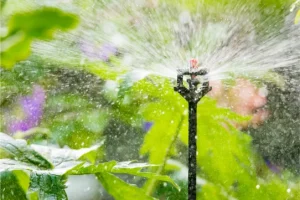
Drip irrigation allows water to be delivered directly to the plant’s roots. This reduces evaporation and saves water. Water harvesting is the method of collecting rainwater for reuse.
Example: In the Mediterranean region, rainwater storage ponds can save 200 tons of water per year.
Tip: Irrigation should be planned for early or late in the day. This reduces evaporation.
Common Mistake: Irrigating inefficiently, even in areas with abundant water. Sustainability is essential not only for scarce resources but for every agricultural area.
Mini Summary: Water management determines the future of sustainable agriculture. Every drop of water, when used correctly, provides economic and ecological benefits.

The Contribution of Technology to Sustainable Agriculture
Technology is the driving force behind sustainable agriculture. Thanks to sensors, data analytics, and artificial intelligence-supported systems, farmers can manage resources more intelligently.
Digital agriculture applications measure soil moisture, analyze weather conditions, and automatically adjust irrigation levels. This increases yields and reduces waste.
Digital Agriculture and Smart Solutions
Smart irrigation systems, drones, and mapping tools supported by satellite imagery optimize production processes. In addition, blockchain technology ensures the traceability of products from field to table.
Example: Smart sensors developed in Turkey provide 40% water savings by automatically irrigating according to soil moisture.
Tip: Open-source digital platforms offer cost advantages for small-scale farmers.
Common Mistake: Thinking that only large businesses can use technology. In fact, digital agriculture is accessible to everyone, regardless of scale.
Mini Summary: Technology accelerates sustainable agriculture. Smart systems provide both environmental and economic benefits.

The Economic Impacts of Sustainable Agriculture
Sustainable agriculture strengthens not only nature but also the economy. Resource efficiency reduces costs, improves production quality, and stabilizes farmer incomes.
Furthermore, local production reduces dependence on imports. This provides significant advantages for both the national economy and rural development.
Farmer Income and Local Development
Although sustainable agriculture practices may seem costly in the short term, they increase income in the long term. This is because soil fertility is preserved, product quality improves, and market value increases.
Example: Farmers practicing sustainable agriculture in Europe have increased their income by an average of 20% within five years.
Tip: Local markets and cooperatives ensure that sustainable products reach consumers directly.
Common Mistake: Postponing environmental investments for short-term gains. However, sustainable agriculture is the guarantee of long-term profitability.
Mini Summary: Economic sustainability is essential for maintaining environmental balance. This model benefits both the farmer and the country.

Successful Examples of Sustainable Agriculture from Around the World
Sustainable agriculture has achieved success worldwide through many different models. Each country has developed unique solutions based on its own ecological and economic conditions.
The Netherlands is a leader in high-tech greenhouse farming. Despite its small land area, it is the world’s second-largest agricultural exporter. It has achieved this success through water conservation, energy efficiency, and vertical farming methods.
Japan has integrated technology into local production through its “smart village” projects. Turkey, meanwhile, is taking significant steps in the fields of agroecology and organic farming.
Tip: Instead of blindly copying successful examples, it is necessary to adapt them to local conditions.
Common Mistake: Viewing a single country’s model as a universal solution. The solution for each region lies in its own nature.
Mini Summary: Sustainable agriculture is based on universal principles but achieves success through local applications.
The Future of Sustainable Agriculture and Policies
In the future, agriculture will be not only about production but also an area of ecological responsibility. Agricultural policies are becoming decisive in the fight against climate change.
The European Union’s Green Deal aims to reduce carbon emissions while ensuring that agricultural production is environmentally friendly. Turkey is also strengthening its compliance policies in this process.
The European Green Deal and the Adaptation Process in Turkey
Turkey implements sustainable agriculture policies within the framework of the Ministry of Agriculture and Forestry’s “good agricultural practices.” Incentives and training programs for farmers are also increasing.
Example: With EU-supported projects, low-carbon agricultural practices have begun to spread in the Mediterranean region.
Tip: Sustainability training needs to be increased so that farmers can adapt to new regulations.
Common Mistake: Focusing policies only on large-scale producers. However, small farmers are the cornerstone of this transformation.
Mini Summary: The future of sustainable agriculture will be strengthened with policy support. Education, incentives, and social awareness are key to this process.

FAQ (Frequently Asked Questions)
The goal is to ensure food security for future generations by protecting natural resources. It considers environmental, economic, and social balance.
No. Organic agriculture is a part of sustainable agriculture. Sustainable agriculture offers a broader framework.
Because population growth and the climate crisis have rendered current agricultural models inadequate. This model provides investment for the future.
The use of organic fertilizers, water harvesting, crop rotation, and digital farming systems support sustainability.
It protects soil health, reduces water consumption, lowers carbon emissions, and increases biodiversity.
Yes. The government encourages sustainable production through “Good Agricultural Practices” and EU compliance projects.
Yes, in the long term. Costs decrease, product quality improves, and income becomes stable.
Absolutely. It is suitable for small farmers with low-cost methods and cooperative support.
Data analysis, automated irrigation, and smart sensors optimize resource use.
With policy support, education programs, and new technologies, it will become more widespread and accessible.
It is possible to produce without harming nature. Be part of sustainable agriculture. Take action today to protect your soil, your water, and your future.