Irrigation Methods in Agriculture play a vital role in increasing productivity and ensuring sustainable crop growth. Choosing the correct system helps farmers provide water efficiently, protect soil structure, and reduce resource waste. Since each crop has unique water requirements, the irrigation strategy must be tailored according to soil type, climate, water availability, and production scale.
Table of Contents
- Surface Irrigation Methods
- Drip Irrigation System
- Sprinkler Irrigation Techniques
- Subsurface Irrigation Applications
- Smart Irrigation Systems
- Crop-Based Irrigation Strategies
- Soil Moisture Monitoring Methods
- Sustainable Irrigation Models
- Summary
- FAQ – Frequently Asked Questions
Surface Irrigation Methods
Surface irrigation is one of the oldest irrigation practices, relying on gravity to distribute water across the field. It is a practical and cost-effective solution for large agricultural areas, although water loss can be high due to runoff and evaporation.
Common Applications
- Flood irrigation
- Basin irrigation
- Furrow irrigation
Key Considerations
- Proper land leveling is essential.
- Water flow must be regulated carefully.
Advantages
- Easy to install
- Low maintenance requirement
- Minimum energy consumption

Drip Irrigation System
Drip irrigation delivers water directly to the plant root zone at a low flow rate. It is considered one of the most efficient modern irrigation techniques because it significantly reduces water waste.
How the System Works
Emitters release water slowly and consistently into the soil. Thus, the plant receives water without wetting the foliage.
Application Areas
- Fruit orchards
- Greenhouses
- Vegetable production

Sprinkler Irrigation Techniques
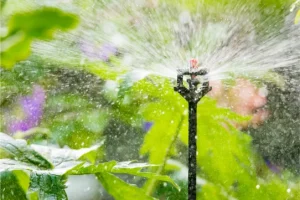
Sprinkler irrigation simulates natural rainfall by spraying water over crops using pressurized systems. It provides highly uniform water distribution but may be affected by strong winds.
| Criteria | Sprinkler Irrigation | Surface Irrigation |
|---|---|---|
| Water Efficiency | Medium | Low |
| Equipment Need | Medium | Low |
| Uniformity | High | Medium |
| Wind Sensitivity | High | Low |
Advantages
- Ensures even distribution across large fields
- Reduces erosion risk
Subsurface Irrigation Applications
Subsurface irrigation delivers water through pipes or tubes placed below the soil surface. This technique minimizes evaporation and supplies moisture directly to the root zone.
Common Uses
- Greenhouse production
- Controlled-environment agriculture
| Feature | Subsurface Irrigation | Drip Irrigation |
|---|---|---|
| Evaporation Loss | Very low | Low |
| Installation | Medium–High | Medium |
| Maintenance | Difficult | Easy |
| Efficiency | High | High |
Smart Irrigation Systems
Smart irrigation uses sensors, automation, and data analysis to schedule watering at the most optimal time. This reduces labor needs and prevents over- or under-irrigation.
Key Features
- Soil moisture sensors
- Remote control software
- Data-driven reporting
Crop-Based Irrigation Strategies
Each crop type has unique water requirements. Therefore, irrigation should be customized to plant species to maximize yield and avoid stress.
Examples by Crop Type
- Fruit trees require deep and infrequent irrigation.
- Leafy greens need frequent but low-volume irrigation.
- Cereals need targeted watering during critical growth stages.
Soil Moisture Monitoring Methods
Monitoring soil moisture is essential for accurate irrigation planning. Without it, plants may suffer from overwatering or drought stress.
Simple Monitoring Techniques
- Hand squeeze test
- Screwdriver penetration test
- Soil moisture meters
Sustainable Irrigation Models
Sustainable irrigation aims to use water efficiently while protecting soil health and long-term productivity. It also focuses on reducing environmental impact.
Core Principles
- Prefer water-saving irrigation systems
- Maintain soil structure and organic matter
- Use data-driven management approaches
Summary
Irrigation methods in agriculture range from surface techniques to advanced smart systems. Each method offers different advantages depending on crop type, climate, soil structure, and water availability. Selecting the right system directly influences yield quality and resource efficiency.
FAQ – Frequently Asked Questions
1. What is the most commonly used irrigation method?
It varies by region, but drip irrigation is highly popular due to its water-saving capacity and efficiency, especially in modern agricultural production.
2. When is surface irrigation most suitable?
It works best on flat or gently sloped fields. With proper land leveling, water spreads evenly. However, it is less effective on steep terrains.
3. Is sprinkler irrigation suitable for all crops?
Most crops are compatible with sprinkler irrigation. However, crops prone to leaf diseases may require careful monitoring. Windy conditions can also reduce system efficiency.
4. How much water can drip irrigation save?
Drip irrigation can save 40–60% more water than traditional surface irrigation because it delivers moisture directly to the roots.
5. When does subsurface irrigation perform best?
It performs well in water-scarce regions. Since water is applied underground, evaporation loss is minimized. Installation is more complex than surface methods.
6. What are the main advantages of smart irrigation?
It enables automation, remote control, and real-time monitoring. This reduces labor and increases water efficiency, especially in large operations.
7. Do farmers need soil moisture sensors?
Not mandatory, but they significantly improve accuracy. Sensors help determine the ideal time and amount of irrigation, reducing waste.
8. Why is crop-based irrigation important?
Different crops require different watering schedules. A one-size-fits-all approach can reduce yield, while a tailored method improves plant health.
9. What is the core goal of sustainable irrigation?
The goal is to conserve water resources while maintaining productivity. It supports long-term agricultural sustainability.
10. Which irrigation method is the most economical?
Surface irrigation is cheaper to set up, but drip irrigation is more cost-effective in the long run due to better water efficiency.
If you need expert support to choose the most efficient irrigation method, feel free to contact us anytime.