The Importance of Choosing a Drip Irrigation Filter plays a crucial role in agricultural irrigation efficiency. Proper filter selection ensures smooth water flow without clogging. It also extends the lifespan of emitters and keeps system pressure stable. Today, growers use various water sources, which makes filtration even more important. Irrigation filters capture sand, silt, algae, and organic residues from the water source. This helps clean water enter the pipeline. However, an incorrectly chosen filter reduces productivity and affects plant health. For example, clogged lines can leave certain areas without water. With proper filtration, water distribution remains balanced.
Table of Contents
- Impact of Filter Selection on Agricultural Yield
- Types of Drip Irrigation Filters
- Filter Capacity and Flow Rate Calculation
- Choosing Filters Based on Water Source
- Maintenance Needs of Filtration Equipment
- Impact of Proper Filtration on Emitter Lifespan
- Common Mistakes in Filter Selection
- Benefits of Professional Installation
- Summary
- FAQ – Frequently Asked Questions
Impact of Filter Selection on Agricultural Yield
Proper filter selection ensures even water distribution. Clean water flow allows all emitters to operate at the same rate. This supports uniform plant growth and increases yield. Particles entering the system cause clogging. Proper filtration eliminates these issues.

Types of Drip Irrigation Filters
Different filters are designed for different water conditions. Each type performs according to the level of contamination in the water source. Selecting the right type is essential.
List: Filter Types
- Disc filter: Effective for organic contamination.
- Screen filter: Suitable for clean or slightly contaminated water.
- Hydrocyclone filter: Ideal for separating sand and heavy particles.
- Sand filter: Used in water sources with high organic content.
Filter Capacity and Flow Rate Calculation
If filter capacity is insufficient, clogging becomes more frequent. This increases irrigation time and energy consumption. Capacity must match the total water flow in the system. Incorrect flow rate calculations can reduce system pressure.
| Irrigation Area (da) | Required Flow (L/s) | Recommended Filter Capacity |
|---|---|---|
| 5–10 | 0.5–1.2 | Medium-capacity filter |
| 10–20 | 1.2–2.5 | High-flow filter |
| 20+ | 2.5+ | Industrial-capacity filter |
Choosing Filters Based on Water Source
Each water source has unique characteristics. Water analysis should be performed before selection. For example, well water may contain sand, while pond water usually has organic matter. The structure of the water determines the correct filter.
| Water Source | Typical Contamination | Suitable Filter Type |
|---|---|---|
| Well | Sand, minerals | Hydrocyclone + screen |
| Pond | Algae, organic matter | Disc or sand filter |
| Municipal | Light sediment | Screen filter |
Maintenance Needs of Filtration Equipment
Regular maintenance ensures efficient system performance. Particles accumulated inside the filter reduce water flow and pressure. Delayed maintenance shortens filter lifespan. Growers should set a periodic cleaning schedule.
Maintenance Checklist
- Inspect internal filter surfaces weekly.
- Clean disc filter grooves with pressurized water.
- Brush screen filter surfaces gently.
- Check sealing rings monthly.
- Monitor pressure differences or clog indicators regularly.
Impact of Proper Filtration on Emitter Lifespan
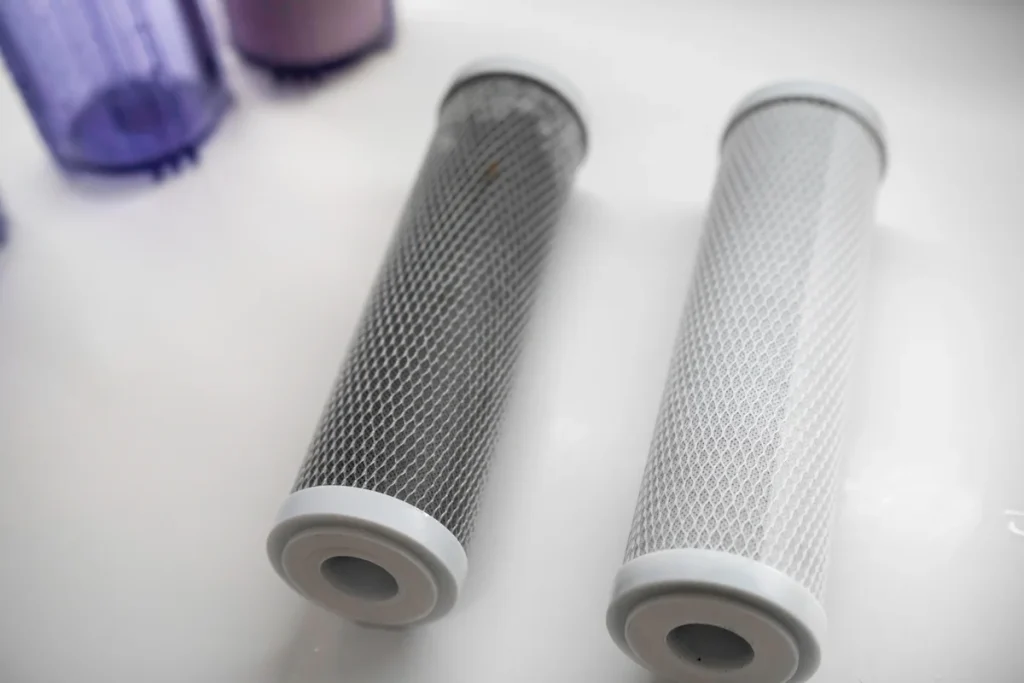
Emitters deliver water directly to the root zone. Poor filtration causes particles to accumulate inside emitter channels, leading to clogging. This increases maintenance costs and reduces yield. Proper filtration keeps emitters functioning smoothly for years.
Common Mistakes in Filter Selection
Many growers make mistakes during filter selection. These errors often stem from skipping water analysis or choosing filters based on cost. However, the wrong filter leads to higher long-term expenses and lower system efficiency.
List: Frequent Mistakes
- Choosing a filter without analyzing water source
- Ignoring capacity and flow requirements
- Using only a screen filter for highly contaminated water
- Not establishing a maintenance routine
- Failing to use clogging indicators
Benefits of Professional Installation
Professional installation ensures proper alignment of filters and pipeline components. This reduces pressure loss and enhances system efficiency. Experts also position filtration units correctly and calculate suitable flow rates. Incorrect installation can render the filter ineffective.

Summary
Drip irrigation efficiency depends heavily on choosing the right filter. Water source analysis, proper capacity calculation, and regular maintenance help prevent clogging and ensure long-lasting system performance. This guide covered filter types, maintenance steps, common mistakes, and installation details.
FAQ – Frequently Asked Questions
Why is a drip irrigation filter so important?
Because it prevents particles from entering the system and clogging emitters. It stabilizes pressure and ensures uniform water distribution across the field, improving yield and system lifespan.
Which filter type gives the best performance?
It depends entirely on the water source. Disc filters work well with organic contamination, while hydrocyclone filters handle sand effectively. Water analysis is essential before choosing.
How often should filters be cleaned?
Cleaning frequency depends on water quality. Weekly checks are recommended, and heavily contaminated water requires more frequent cleaning. Regular maintenance maximizes filter performance.
Why do drip irrigation systems clog?
Clogging happens due to sand, silt, algae, or organic particles in the water. Insufficient filtration accelerates clogging, and lack of maintenance makes it worse.
How is filter capacity determined?
Capacity depends on the system’s total water flow rate. Incorrect calculations cause pressure drops and clogging risks. Professional measurement is recommended.
Is water source analysis necessary?
Yes. Every source contains different particle types. Wells may carry sand, while ponds hold organic matter. Analysis ensures correct filter selection.
What is the most common mistake in filter selection?
Skipping water analysis. Capacity miscalculations and choosing the wrong filter type are also frequent and lead to system inefficiency.
What is the main difference between disc and screen filters?
Disc filters are ideal for organic contamination. Screen filters are suitable for lightly contaminated waters. Selection depends on water quality.
Does professional installation make a difference?
Yes. Professionals ensure correct filter alignment, proper sizing, and optimal pressure distribution. This boosts overall system performance.
Can improper filtration harm plants?
Yes. Clogging prevents even water distribution, leaving some plants dry while over-watering others. This negatively affects plant development.
If you want to build a more efficient irrigation system, feel free to contact us. We can help you design the ideal filtration setup.