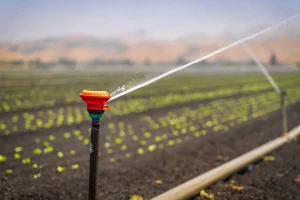
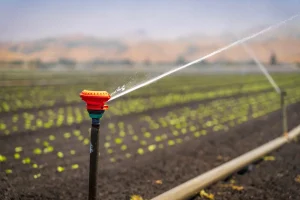
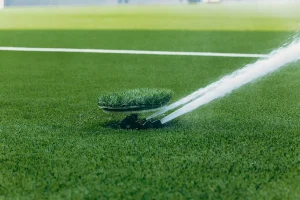
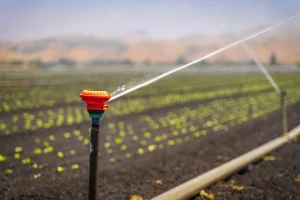
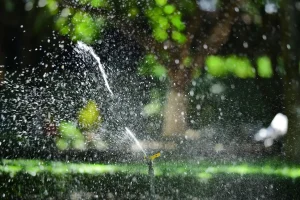
Sprinkler irrigation applies water through pressurized nozzles that spray droplets over crops or turf. It works best when the design matches soil intake, wind exposure, crop height, and available pump pressure. With sprinkler irrigation, growers can cover large areas, irregular plots, and many crop types without surface flooding.
Table of Contents
- How Sprinkler Irrigation Works
- Where Sprinkler Irrigation Fits Best
- Designing a Sprinkler Irrigation Layout
- Pressure and Flow in Sprinkler Irrigation
- Filtration and Water Quality for Sprinklers
- Automatic Sprinkler Irrigation and Smart Controls
- Installation Practices for Sprinkler Irrigation
- Operation and Maintenance of Sprinkler Irrigation
- Sprinkler Irrigation Support from Güneysu Teknik
- Common Mistakes in Sprinkler Irrigation Projects
- Frequently Asked Questions
How Sprinkler Irrigation Works
A sprinkler network moves water from a source to the crop through pipes, valves, risers, and nozzles. First, the pump creates pressure. Then, the distribution pipes carry water to each sprinkler. Finally, each nozzle breaks the flow into droplets and spreads them over a planned radius.
In practice, sprinkler irrigation depends on uniform application. Each sprinkler overlaps with the next one, so dry gaps stay limited. Wind, pressure loss, nozzle wear, and spacing all affect that overlap. As a result, the design should use field measurements, not assumptions.
Droplet size matters because heavy drops can crust sensitive soil. Very fine droplets may drift in wind. For example, seedbeds often need gentler application than mature forage. Orchard alleys, field crops, and turf also need different riser heights and spray patterns.
Main Components in a Sprinkler Network
Every sprinkler network starts with a water source. This source may be a well, reservoir, pond, canal, or tank. Next, a pump and mainline deliver water to submains. Valves divide the area into zones, while laterals feed individual sprinklers.
The sprinkler head, nozzle, and pressure regulator shape final performance. Also, the control valve must match the required flow. A poor match can cause weak throw, misting, or uneven coverage. These issues may reduce irrigation quality across the field.
Where Sprinkler Irrigation Fits Best
Sprinkler irrigation fits many field crops, forage areas, nurseries, vegetable plots, and turf sites. It helps where surface leveling would be difficult or costly. Still, it may not suit every farm. Windy fields, saline water, and very high evaporation demand require closer review.
An agricultural sprinkler irrigation system needs a different design approach than a small garden zone. Field systems often cover larger blocks and require stronger hydraulic planning. Meanwhile, compact sites may focus more on controller timing, overspray control, and low visual impact.
For crops with shallow roots, short irrigation sets may protect root-zone moisture. In contrast, deep-rooted crops may need longer cycles at lower frequency. Soil texture also changes the plan. Sandy soils accept water quickly, while clay soils need slower application.
| Site Type | Typical Priority | Design Concern |
|---|---|---|
| Field crops | Uniform coverage | Wind and pressure loss |
| Vegetables | Gentle droplets | Soil crusting risk |
| Orchards | Clearance and access | Trunk and canopy patterns |
| Turf areas | Visual quality | Overspray and runoff |
| Nurseries | Frequent light cycles | Container drainage |
Crop and Soil Conditions That Matter
Crop stage affects irrigation decisions. Young plants need careful application because leaves and soil surfaces are exposed. Later, canopy cover can reduce soil evaporation. However, tall crops may block low sprinkler patterns, so riser height becomes important.
Soil infiltration sets the safe application rate. If sprinklers apply water faster than soil can absorb it, runoff starts. Therefore, designers compare nozzle output with soil intake. They also consider slope, residue cover, and existing compaction.
Designing a Sprinkler Irrigation Layout
A strong layout begins with a field map, water source data, and crop plan. The map should show boundaries, slopes, roads, power points, and obstacles. Then, the designer selects zone sizes that match pump capacity and pipe limits.
Sprinkler irrigation spacing depends on nozzle radius and wind conditions. Square spacing, rectangular spacing, and triangular spacing each behave differently. In practice, tighter spacing often improves distribution under wind. Yet it can increase pipe length and total system flow.
A good layout balances coverage, pressure, and operating simplicity. Valves should be reachable for maintenance. Laterals should avoid unnecessary bends. Also, zones should irrigate similar crop and soil areas together. This keeps scheduling more accurate during the season.
Field Data Needed Before Sprinkler Design
Accurate design needs measured data. Estimates can create costly pressure errors. For instance, a small elevation difference can reduce sprinkler performance at the far end. Water level changes in wells or reservoirs also affect available pressure.
- Measure field length, width, slope, and elevation changes.
- Record water source capacity during the planned irrigation period.
- Test static and dynamic pressure at the pump station.
- Identify soil texture, infiltration limits, and drainage behavior.
- List crop spacing, canopy height, and seasonal water demand.
- Check power availability, pump controls, and access routes.
Garden sprinkler irrigation may need the same basic checks, but on a smaller scale. Overspray onto walls, paths, or roads can waste water. Similarly, mixed plantings create scheduling conflicts when shrubs, turf, and seasonal beds share one zone.
Pressure and Flow in Sprinkler Irrigation
Pressure and flow control the real performance of sprinkler irrigation. Too little pressure reduces throw and breaks overlap. Too much pressure creates mist, drift, and faster nozzle wear. Therefore, the design should match pump output with manufacturer sprinkler data.
Flow rate affects pipe sizing and zone planning. Each sprinkler uses a specific flow at a specific pressure. When many sprinklers run together, the pump must supply the combined demand. Also, the pipes must carry that flow without excessive friction loss.
Designers calculate pressure from the pump to the farthest sprinkler. They include elevation, valves, filters, fittings, and pipe friction. Then, they compare the remaining pressure with the nozzle requirement. This process reduces weak zones at field edges.
Why Uniform Pressure Matters
Sprinklers do not perform equally when pressure varies widely. A high-pressure head may throw beyond its target area. In contrast, a low-pressure head may leave dry bands. Pressure regulation can help when elevation or long pipe runs cause imbalance.
Uniformity also affects fertigation decisions. If fertilizer enters a sprinkler network, uneven water distribution can create uneven nutrient placement. For this reason, fertigation through sprinklers needs careful injection control, backflow protection, and crop-specific agronomic planning.
| Hydraulic Issue | Field Symptom | Possible Check |
|---|---|---|
| Low pressure | Short throw | Pump curve and pipe loss |
| High pressure | Misting | Regulators and nozzle size |
| Uneven flow | Dry bands | Valve sizing and zone balance |
| Friction loss | Weak far end | Mainline and lateral diameter |
Filtration and Water Quality for Sprinklers
Filtration protects nozzles, valves, and regulators from plugging. The required filter type depends on the water source. Well water may carry sand. Surface water may carry algae, silt, or organic debris. As a result, filter selection should follow water testing.
Sprinkler irrigation usually tolerates larger particles than drip irrigation, but clogging still matters. A partly blocked nozzle changes the spray pattern. It may also raise pressure upstream. Over time, small blockages can create clear crop stress patterns.
Sand separators, screen filters, disc filters, or media filters may serve different sites. The final choice depends on particle type, flow rate, and maintenance capacity. Also, flushing points should sit where operators can reach them safely.
Water Testing Before Sprinkler Irrigation
Water quality testing should review suspended solids, sand load, pH, EC, iron, manganese, and biological activity. These factors affect clogging and corrosion. If fertigation will operate through the network, nutrient solubility and injection safety need extra review.
Salinity creates another concern. Sprinklers wet foliage, so salts can remain on leaves after evaporation. Sensitive crops may suffer under hot, dry, or windy conditions. Instead, another irrigation method may suit saline water better after agronomic evaluation.
Automatic Sprinkler Irrigation and Smart Controls
Automatic sprinkler irrigation uses controllers, valves, sensors, and sometimes remote monitoring. These controls help operators start and stop zones with better timing. Still, automation cannot correct poor hydraulic design. It works best after pressure, flow, and coverage are right.
Controllers can schedule irrigation by time, soil moisture, weather input, or operator decisions. For example, soil sensors can show whether the root zone still holds usable water. Meanwhile, flow sensors can detect breaks or abnormal demand during operation.
Smart control should serve the crop plan, not replace it. Crop evapotranspiration, rooting depth, soil texture, and rainfall all influence schedules. In practice, operators should verify sensor readings with field checks and plant observation.
Automation Features That Improve Control
Automation becomes valuable when it prevents common operating errors. It can reduce missed cycles, long run times, and manual valve mistakes. Also, alerts can help teams respond quickly when a pump, filter, or valve behaves abnormally.
- Start zones according to crop water demand and soil moisture targets.
- Stop irrigation when rain or moisture conditions make watering unnecessary.
- Monitor flow changes that may indicate leaks, blockages, or open valves.
- Record operating history for better seasonal adjustments.
- Coordinate pump operation with valve sequencing and pressure protection.
For lawn sprinkler irrigation, automation often focuses on short cycles and runoff control. Turf roots can be shallow in compacted soil. Therefore, cycle-and-soak programming may help water enter the soil rather than move across the surface.
Installation Practices for Sprinkler Irrigation
Proper installation turns the design into dependable field performance. Pipe trenches should follow planned grades and routes. Fittings need clean assembly and correct sealing. Next, installers should flush lines before placing nozzles into final service.
Sprinkler irrigation installation should include pressure checks at representative points. The first check should occur near the pump station. Then, crews should measure pressure at midpoints and far ends. These readings confirm whether the system matches the design.
Riser alignment affects spray patterns. Crooked risers can throw water outside the target area. Also, low heads may hit foliage, stakes, or uneven ground. In row crops, riser placement should allow machinery movement and safe maintenance.
A Practical Installation Sequence
A clear sequence helps crews avoid rework. Each step should protect pipe cleanliness and equipment alignment. In addition, pressure testing should occur before trenches close where possible.
- Confirm the field layout, valve locations, and pipe routes on site.
- Prepare trenches or supports according to pipe depth and access needs.
- Install mainlines, submains, valves, and laterals with clean joints.
- Flush debris from pipes before connecting sprinklers and regulators.
- Install risers, sprinkler bodies, nozzles, and pressure control devices.
- Test each zone for pressure, leaks, rotation, and coverage pattern.
- Adjust nozzles and arcs before scheduling regular irrigation cycles.
Seasonal or portable systems need extra attention during movement. Couplings, gaskets, and portable risers can wear quickly. For this reason, operators should inspect these parts before each setup. Safe handling also protects pipes from cracks and deformation.
Operation and Maintenance of Sprinkler Irrigation
Sprinkler irrigation needs regular observation during actual operation. A system can look correct when idle, yet fail under pressure. Operators should walk the zone and watch rotation, arc, misting, runoff, and blocked heads.
Maintenance should follow a routine. First, clean filters based on pressure differential or scheduled checks. Next, inspect nozzles and seals. Then, repair leaks quickly because small leaks can change pressure across an entire zone.
Irrigation scheduling should adjust through the season. Early growth stages often need lighter applications. Later, larger plants may draw more water. However, rainfall, temperature, wind, and soil moisture should shape the final decision each week.
Routine Checks During the Season
Maintenance records help teams identify repeating problems. If one zone often runs weak, pressure loss may be present. Similarly, repeated clogging may show a filtration issue. Records also help plan spare parts before peak demand.
- Check sprinkler rotation, spray angle, and nozzle condition.
- Measure pressure at selected points during full zone operation.
- Clean filters and flush line ends when sediment appears.
- Inspect valves, gaskets, couplings, and riser supports.
- Watch for runoff, ponding, wind drift, and dry strips.
- Update schedules after crop stage, weather, and rainfall changes.
Winter or off-season care depends on local climate. Freezing conditions can damage pipes, valves, and sprinkler bodies. In colder areas, operators should drain exposed lines and protect controls. Manufacturer instructions should guide specific winterization steps.
Sprinkler Irrigation Support from Güneysu Teknik
Güneysu Teknik supports growers and project owners with irrigation planning, equipment selection, installation, filtration, water storage, and automation services in Turkey. Güneysu Teknik also helps evaluate whether sprinkler irrigation, drip irrigation, micro-sprinklers, or another method suits the site conditions.
A practical project starts with source capacity, field layout, crop needs, and operating goals. After that, equipment choices become more accurate. Pumps, filters, pipes, valves, sprinklers, tanks, and controllers should all work as one system.
Some farms combine sprinklers with fertigation or storage tanks. Others use sprinklers for germination, cooling, frost protection, or turf care. That said, each use requires separate agronomic and hydraulic review. The same hardware may not fit every task.
Integrating Sprinklers with Broader Irrigation Projects
Sprinklers often share infrastructure with other irrigation methods. A reservoir, filtration station, pump unit, or control panel may serve several zones. Even so, each zone needs its own pressure and flow checks before operation.
Where advanced control is needed, project teams may connect valves and sensors to smart irrigation platforms. Netafim products can be relevant for fertigation and automation projects when specifications match site needs. Compatibility should always follow manufacturer data and engineering review.
Common Mistakes in Sprinkler Irrigation Projects
Many sprinkler irrigation problems begin before installation. Designers may overlook wind, elevation, soil intake, or real pump capacity. As a result, a system may operate, but it may not irrigate evenly. Early measurements reduce that risk.
Another common mistake involves mixing too many plant types in one zone. Turf, vegetables, shrubs, and trees can need different schedules. When they share one valve, some areas may receive too much water while others receive too little.
Nozzle changes also create hidden issues. A larger nozzle may seem helpful during dry weather. However, it raises zone flow and may lower pressure. Instead, schedule changes and soil moisture checks should come before hardware changes.
Warning Signs That Need Attention
Field symptoms often show system problems quickly. Dry arcs, wet rings, mist clouds, and runoff all point to specific causes. For instance, dry arcs may indicate clogged nozzles, low pressure, or poor spacing.
- Investigate dry bands before increasing total irrigation time.
- Correct misting by checking pressure, nozzles, and wind conditions.
- Repair leaks before they reduce pressure in distant sprinklers.
- Separate zones when crop water needs differ strongly.
- Review filtration when the same nozzles clog repeatedly.
Good management depends on observation and measured data. A pressure gauge, catch-can test, soil probe, and flow reading can reveal much. Finally, operators should review performance after major crop, weather, or water source changes.
Frequently Asked Questions
What Is the Main Advantage of Sprinkler Irrigation?
It can distribute water over many crop and turf areas without field flooding. It also adapts well to irregular shapes when the layout is designed correctly.
Does Wind Affect Sprinkler Performance?
Yes, wind can move droplets and reduce uniformity. Designers may use closer spacing, suitable nozzles, or different irrigation times to reduce drift.
How Often Should Filters Be Cleaned?
Cleaning depends on water quality and operating hours. A pressure difference across the filter often signals that cleaning is needed.
Can Sprinklers Be Used for Fertigation?
Yes, but the system needs correct injection equipment and safety devices. Nutrient plans should match the crop, water chemistry, and local agronomic advice.
Why Do Some Sprinklers Create Mist?
Misting often comes from excessive pressure or unsuitable nozzles. Wind can make the problem more visible during operation.
Is a Portable System Different from a Fixed System?
Yes, portable systems move between sets and need more handling. Fixed systems need more installed pipe but reduce daily movement.
When Should a Sprinkler Layout Be Reviewed?
Review it before installation and after major changes. New crops, pump changes, added zones, or water source changes can affect performance.