To briefly answer the question “What is a fertilizer mixing tank and what does it do?”, these systems ensure that liquid or soluble fertilizers are mixed homogeneously and added to irrigation water in a balanced manner. This allows plants to receive the nutrients they need in equal proportions. It has become one of the fundamental components of drip irrigation and automatic fertilization systems, especially in modern agriculture.
Thanks to these tanks, the fertilizer mixture is distributed in the same proportion in every application. This both reduces costs and improves product quality. It also allows different types of fertilizers to be used together. This way, the producer can easily prepare the most suitable mixture according to the needs of the soil and the plant.
In summary, fertilizer mixer tanks offer precision, efficiency, and sustainability in agricultural production. When used correctly, they save both energy and water. In this article, we will examine step by step how these tanks work, their types, advantages, and selection criteria.
Contents
- What is a Fertilizer Mixing Tank?
- How Does a Fertilizer Mixing Tank Work?
- Areas of Use and Application Examples
- Advantages of Fertilizer Mixing Tanks
- Tank Types and Technical Specifications
- Things to Consider When Choosing a Fertilizer Mixing Tank
- Maintenance and Cleaning Tips
- Comparison with Alternative Systems
- Summary
- FAQ (Frequently Asked Questions)
What is a Fertilizer Mixing Tank?
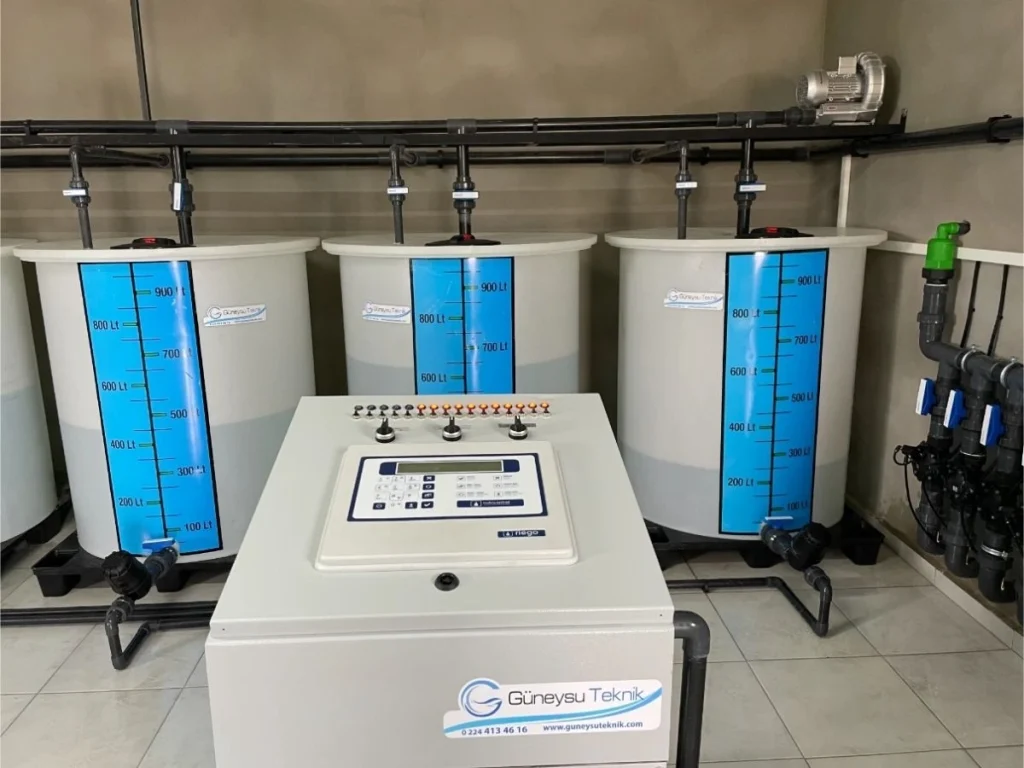
A fertilizer mixing tank is equipment that mixes liquid or powdered fertilizers with water to create a homogeneous solution. It usually works in conjunction with drip irrigation and sprinkler systems. The tank contains a mechanical or automatic mixer. This mixer ensures that the fertilizer is completely dissolved in the water.
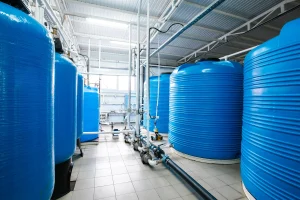
Tanks are usually made of durable plastic or stainless steel. This makes them resistant to chemical reactions and ensures long-term use. They are widely preferred in agricultural areas because they support healthier plant growth by maintaining nutrient balance.
Basic Definition and Functions
The main function of a fertilizer mixer tank is to mix the fertilizer evenly and transfer it to the irrigation system in a controlled manner. This ensures that the micro and macro nutrients required by plants are provided in the correct proportions.
System Components
These types of tanks typically include the following parts:
- Mixer motor
- Fertilizer inlet valve
- Water inlet and outlet connections
- Pressure gauge
- Drain valve
Each component is essential for the quality of the mixture and the safe operation of the system.
How Does a Fertilizer Mixing Tank Work?
This system works by feeding water into the fertilizer tank at a specific rate. The inlet pressure draws the mixture into the mixing area of the fertilizer tank, where mechanical or automatic mixers come into play. The resulting mixture is directed to the irrigation line and distributed evenly to the plants.
Mechanical Mixing Principle
In mechanical systems, mixing is performed with the help of a motor or hand crank. These types of tanks are generally preferred in small-scale agricultural areas.
Advantages:
- Low energy consumption
- Simple maintenance
- Easy to use
Disadvantages:
- It may take longer to obtain a homogeneous mixture
- Efficiency may decrease in large-scale systems
Automatic Mixing Systems
Automatic systems are equipped with sensors and timers. The fertilizer mixing ratio is automatically adjusted by the system. This eliminates human error and ensures that the nutrient balance is always maintained.
| Feature | Mechanical System | Automatic System |
|---|---|---|
| Energy Consumption | Low | Medium |
| Mixture Homogeneity | Medium | High |
| Ease of Use | Manual | Fully Automatic |
| Application Area | Small Farms | Large Enterprises |
Areas of Use and Application Examples
Fertilizer mixer tanks are widely used in various branches of agriculture. The most common areas are as follows:
- Greenhouses: They work in conjunction with automatic fertilization systems to ensure plants receive regular nutrients.
- Field Crops: Ensures balanced fertilizer distribution, especially for crops such as corn, wheat, and sunflowers.
- Drip Irrigation Systems: Nutrients are delivered directly to the root zone.
- Gardening: Delivers effective results for fruit trees and ornamental plants.
Industrial Applications
Some industries, particularly the chemical and food sectors, utilize these tanks for the precise preparation of liquid mixtures. However, the most common application remains agricultural production.
The versatility of these systems offers a valuable advantage for both small producers and industrial facilities.
Advantages of Fertilizer Mixing Tanks
The most significant advantage of these tanks is that they ensure homogeneity in fertilization. They also save time and labor. Mixing fertilizer directly into irrigation water prevents unnecessary waste.
The main advantages are as follows:
- Nutrients are distributed evenly.
- Fertilizer consumption is reduced.
- Plant growth is balanced.
- They save labor and energy.
- They reduce soil salinity.
Energy and Water Efficiency
Fertilizer mixing tanks use much less water than traditional methods. Furthermore, operating costs are reduced thanks to the energy efficiency of the pumps and mixer motors.
Therefore, these systems stand out as a long-term investment for producers aiming for sustainable agriculture.
Fertilizer Mixer Tank Types and Technical Specifications
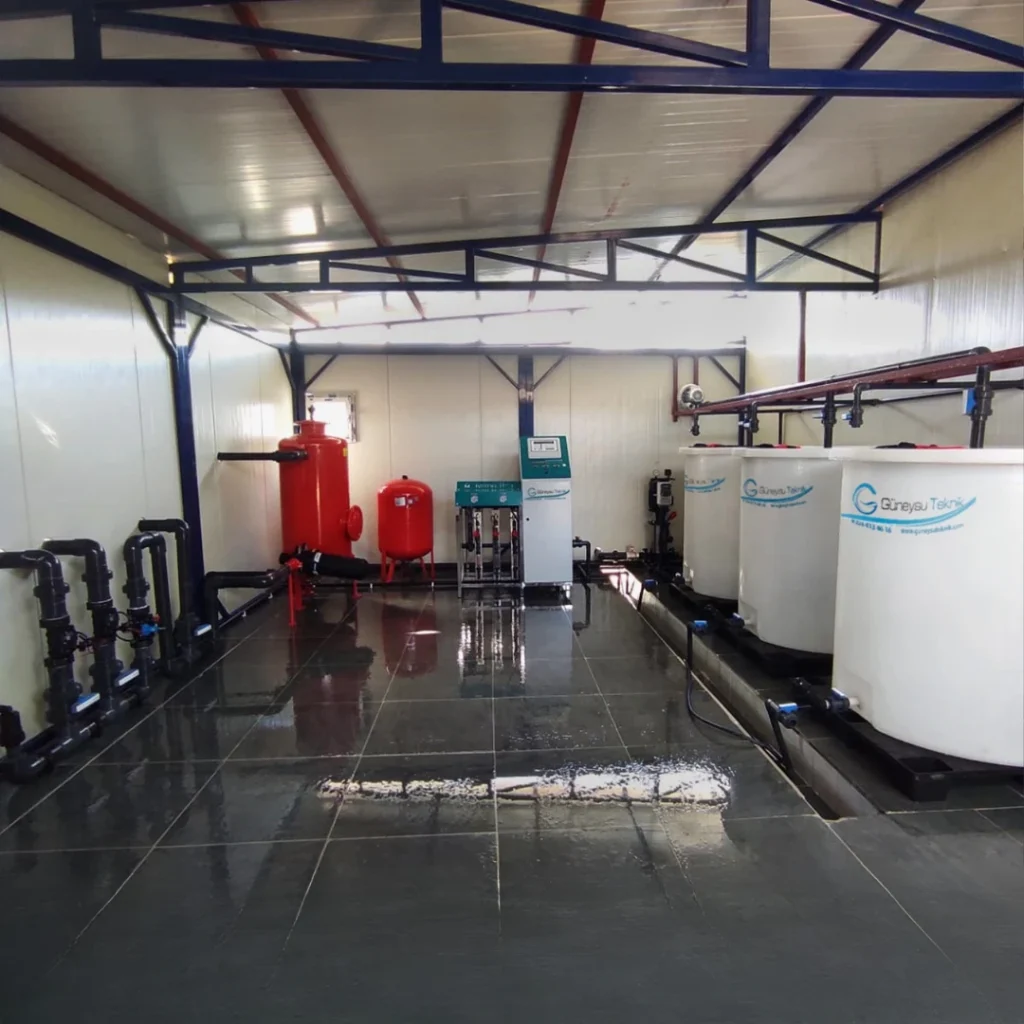
Fertilizer mixer tanks are manufactured in different types according to their intended use and technical specifications. Each model has its own unique advantages and capacity. This allows producers to easily select a system that suits their needs.
The three most common main tank types are:
- Static (Pressurized) Tanks
- Dynamic (Mixer) Tanks
- Automatic Mixer Tanks
Static models mix fertilizer using water pressure. These systems do not require energy and are suitable for small-scale areas. In dynamic tanks, a mechanical motor provides mixing. This increases the dissolution rate. Automatic models feature a sensor-supported control system, and the mixture is completely self-adjusting.
| Tank Type | Operating Method | Energy Requirement | Application Area | Mixing Quality |
|---|---|---|---|---|
| Static | Mixing by pressure difference | None | Small gardens | Medium |
| Dynamic | Mechanical mixing motor | Low | Medium-scale areas | High |
| Automatic | Sensor-controlled system | Medium | Large fields | Very high |
This table simplifies the decision-making process for manufacturers when choosing a system. Each tank type offers different advantages depending on the size of the operation and the irrigation method.
Things to Consider When Choosing a Fertilizer Mixing Tank
The right tank selection directly affects both the quality of the mixture and the system’s lifespan. Therefore, certain technical and environmental factors should be considered before purchasing.
The main factors to consider are as follows:
- Capacity: Should be determined based on the size of the area to be used.
- Material: Stainless steel or UV-resistant plastic should be preferred.
- Mixing System: Mechanical or automatic options should be selected according to need.
- Pressure Resistance: It should be suitable for the pressure in the irrigation line.
- Ease of Maintenance: Parts replacement and cleaning access should be easy.
Installation Area and Climate Impact
The location where the tank is installed directly affects the system’s performance. In cold climates, insulation is required to prevent freezing. In hot regions, materials with high UV resistance should be selected. Additionally, the tank’s base must be flat and sturdy.
These criteria are critical for long-lasting and efficient use.
Maintenance and Cleaning Tips
Regular maintenance of fertilizer mixer tanks extends the system’s lifespan and maintains mixture quality. Over time, sediment and lime buildup occurs in neglected tanks. This negatively impacts both mixture balance and irrigation system performance.
Regular Check Steps
- Check the mixer motor and connection hoses weekly.
- Rinse the inside of the tank with clean water after each use.
- Check the pressure gauge once a month.
- If necessary, open the drain valve to remove accumulated sediment.
Important cleaning considerations:
- Use neutral soap instead of chemical cleaning agents.
- Do not use abrasive sponges on metal surfaces.
- Do not reuse the tank until it is dry.
These simple steps will maintain the tank’s efficiency for many years.
Comparison with Alternative Systems
Some manufacturers still use manual fertilizer mixing methods. However, when compared to modern fertilizer mixer tank systems, manual methods lag far behind in terms of efficiency.
This table shows that mixer tank systems offer a more balanced solution compared to manual applications. Although automatic dosing systems are more precise, they are more expensive. Therefore, fertilizer mixer tanks are the most suitable option in terms of performance and budget balance.
Summary
In response to the question “What is a fertilizer mixer tank?”, it is the most efficient and practical method of fertilization in modern agriculture. Produced in different types, these systems save both energy and water. They also support plant growth by distributing nutrients evenly. With regular maintenance and the right choice, these tanks can be used safely for many years.
FAQ (Frequently Asked Questions)
It can work compatibly with drip irrigation, sprinkler, and hydroponic systems.
Capacity is calculated based on the size of the area to be irrigated and the amount of fertilizer used.
Stainless steel and UV-resistant plastic tanks are long-lasting.
It can work partially, but the homogeneity of the mixture decreases. Therefore, motor maintenance is important.
Internal cleaning is recommended every 2–3 uses.
Yes, because the mixing ratio is continuously controlled by sensors.
Yes, high efficiency is achieved with low energy consumption.
No, it can usually be installed in a few connection steps.
No, on the contrary, it reduces waste fertilizer quantities through proper dosing.
It can be used at any scale, from small family businesses to large agricultural facilities.
If you want to increase productivity in agriculture and optimize water and fertilizer use, choose fertilizer mixer tank systems. With proper planning and regular maintenance, high-quality production is within your reach!