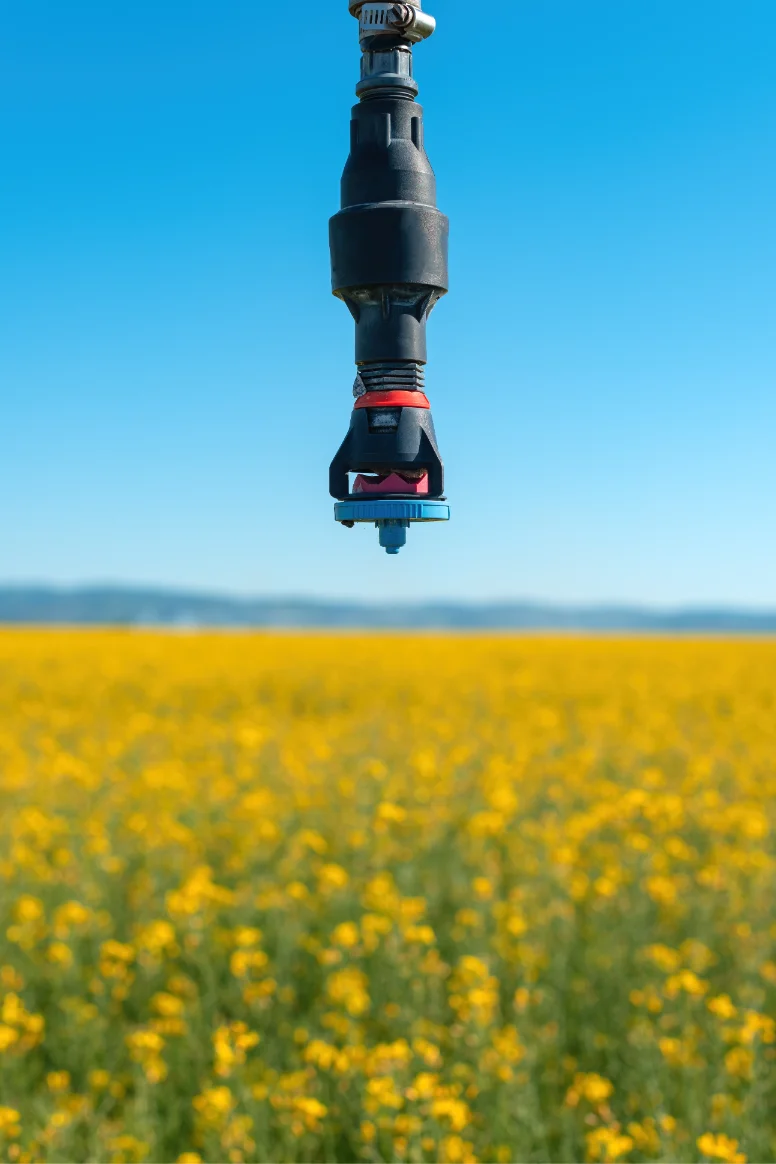
Sprinkler irrigation is a modern irrigation method that uses special nozzles to spray pressurized water into the air, allowing it to reach the soil with a natural rain effect. This system was developed to meet the water needs of plants in the most efficient way possible, enabling water to be distributed evenly across the land.
Inspired by nature's own irrigation system, sprinkler irrigation gives life to your plants by making efficient use of every drop.
This system brings the naturalness of rain to your field, giving life and productivity to the soil with every drop.
Natural Rainfall Effect
This irrigation method is called “sprinkling” because it allows water to fall onto the soil in a manner similar to natural rainfall. Water slowly seeps into the soil around the plant roots, providing the moisture needed by the plants. This prevents water wastage and supports healthy plant growth.
Effective and Equitable Water Distribution
Sprinkler irrigation systems ensure that water is distributed evenly over a wide area, guaranteeing that sufficient water reaches every part of the plants. It is an ideal method for efficient irrigation, especially on sloping land and large agricultural areas.
Sprinkler irrigation treats every plant with equal care, bringing water to the soil in a fair manner and giving life to every root zone.
Sprinkler irrigation saves water by making efficient use of every drop, while also contributing to sustainability in agriculture.
Water Conservation and Efficiency
This system minimizes losses caused by evaporation and surface runoff by ensuring that water is applied in a controlled manner. At the same time, it enables more land to be irrigated with lower water consumption and contributes to sustainable agricultural practices.
Wide Range of Applications
Sprinkler irrigation can be used for many different types of plants, from grain crops to lawns, vegetable gardens to fruit trees. Thanks to its flexible structure, it is preferred as an effective irrigation method for both large-scale agricultural areas and small gardens.
Sprinkler irrigation provides excellent results by adapting perfectly to all types of plants and all sizes of land.
Agricultural Irrigation
Efficient Water Use and Sustainable Agricultural Methods
Efficient water use promotes sustainable production by preventing water waste in agriculture, while helping to increase soil fertility through proper irrigation techniques.
Drip Irrigation
Drip irrigation saves water by delivering it directly to plant roots, while contributing to more efficient plant growth.
Under-tree micro-sprinkling minimizes water loss and supports healthy plant growth by delivering water directly and efficiently to the root zone of trees.
Greenhouse irrigation increases productivity by accurately meeting the water needs of plants in a controlled environment, while also preventing water waste.
Hydroponic irrigation is an efficient and sustainable farming method that provides plants with nutrients by mixing them directly into water without using soil.
Center pivot systems are an effective irrigation method that increases agricultural productivity while saving water by ensuring that water is distributed evenly across large areas.